



Adaptogens are natural substances, mainly herbs, mushrooms and roots, that have been used for centuries in Ayurveda (traditional Indian healing) and traditional Chinese medicine.1
Today, adaptogens come in various supplement forms, functional foods and beverages. With growing interest in plant-based lifestyles and natural remedies, more and more people are taking adaptogen products as part of a holistic wellness routine to maintain whole-body balance (homeostasis) and promote overall well-being.
But what are adaptogens, exactly, and what do they do? We'll answer these questions ahead, then go over four common types and the benefits associated with them.
Key takeaways
- Adaptogens are natural ingredients commonly used in wellness routines, though they've been a part of Ayurveda and Chinese medicine for centuries.
- These herbal substances are traditionally associated with supporting balance and resilience in the body.
- Different adaptogens are used for different roles within daily routines.
What are adaptogens?
Adaptogens are a category of natural ingredients traditionally used in Chinese medicine and Ayurveda. Today, they're often included in wellness practices and holistic lifestyle routines to help the body maintain balance during everyday challenges.
These naturally occurring substances are derived from roots, mushrooms and herbs. The plant-sourced ingredients can be included in various supplements (think adaptogen gummies, capsules or powders) and functional beverages, like sparkling canned drinks.
Research on adaptogens has looked at how they may interact with the body's stress response and nervous system.2,3 They're traditionally associated with helping support balance, calm, mental clarity and general well-being amid everyday physical and environmental demands.4As with any wellness product, consistency and personal experience may vary from person to person.
List of adaptogens and their benefits
A few popular adaptogens include ashwagandha, L-theanine, ginseng and lion's mane.
#1 Ashwagandha
Ashwagandha (Withania somnifera) is an ancient herb. Sometimes called Indian ginseng, it's used in Ayurveda to support holistic well-being. This adaptogen is thought to help the body respond to stress, support feelings of calm and balance, and possibly help the mind wind down for sleep.5,6*
#2 L-theanine
L-theanine is an amino acid derived from green and black tea leaves. Many consider it an adaptogen, as it's thought to work similarly in wellness rituals to support a relaxed yet focused state while helping the body manage stress.7* But others think of it as adaptogen-adjacent rather than a true adaptogen.
#3 Ginseng
Ginseng is derived from a root (often Panax ginseng or Panax quinquefolius). This potent adaptogen is traditionally used in East Asian herbal medicine. It's commonly associated with supporting energy, vitality and homeostasis in daily wellness routines. Research on ginseng often looks at its potential role in supporting the body's stress response and immune function.8,9*
#4 Lion's mane
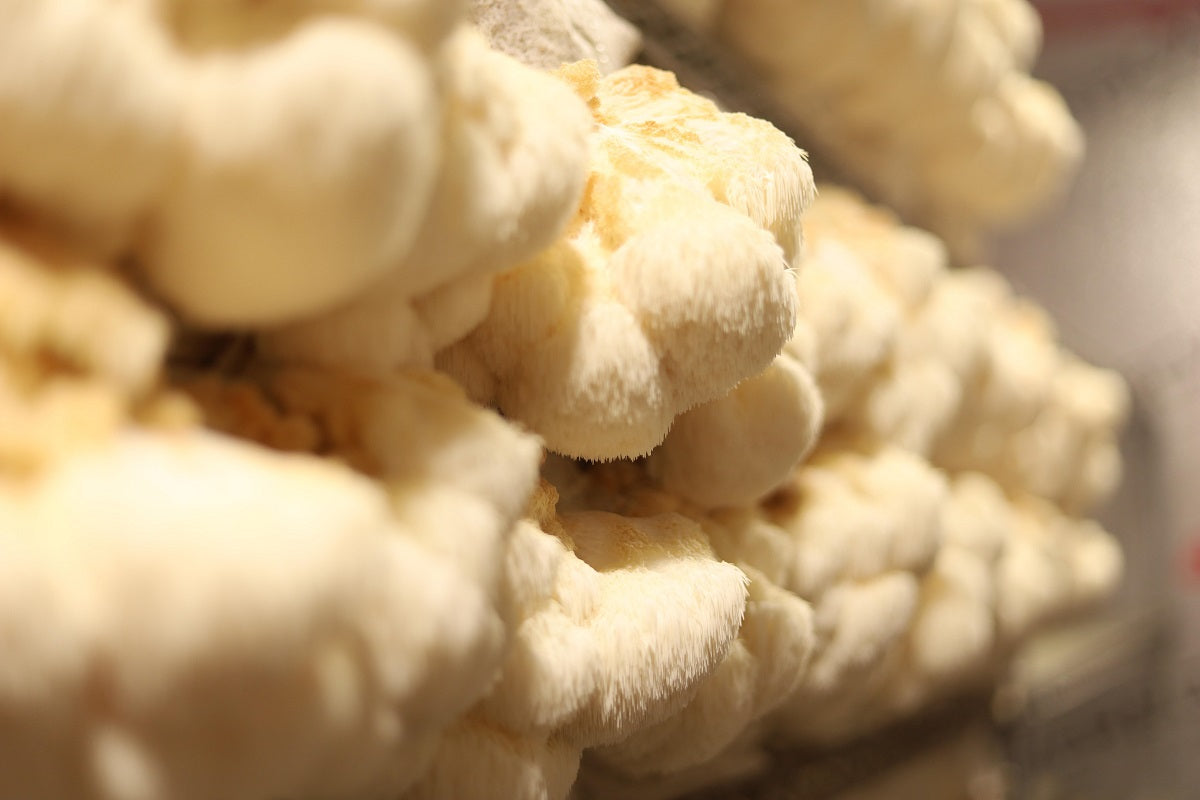
Lion's mane (Hericium erinaceus) is an adaptogenic mushroom. The name comes from its white, shaggy exterior that resembles hair or a beard (it's also sometimes "bearded-tooth" mushroom). This functional, edible fungus has been used for centuries in traditional Chinese medicine. It's often associated with supporting focus, cognitive clarity and healthier moods in daily routines.10,11*
How adaptogens are used in modern wellness routines
While adaptogens have been used for thousands of years, reaping the benefits of these herbal substances has never been easier. You can find them in a variety of everyday products:
- Capsules – Capsules are typically filled with a powdered form of adaptogenic extracts. These might need to be taken with food, depending on how your stomach tolerates them.
- Gummies – Gummy supplements make it easy to get a daily serving of adaptogens. Plus, they have a yummy, juicy flavor and can be taken on the go.
- Powders – Powdered adaptogens can be combined with cold water and served over ice. Or blend a scoop into your morning smoothie.
- Functional beverages – These refreshing drinks are ready to sip and routine-friendly. They're great for an afternoon break.
- Wellness shots – You can also try wellness shots made with lion's mane, ginseng or other adaptogens.
TRIP adaptogenic supplements and drinks are designed to fit into daily rituals and wellness routines. Each formula combines adaptogens with other thoughtfully selected ingredients, like magnesium, to support mind and body balance.*
Adaptogens in everyday wellness
Adaptogens are a category of natural ingredients that have been used in traditional wellness systems for thousands of years. From lion's mane and ashwagandha to L-theanine and ginseng, there are numerous forms associated with different roles in daily rituals.
When exploring adaptogens, it's important to choose products that align with your lifestyle and wellness goals. If you're working toward whole-body balance or want to level up your supplement stack, explore your options to see what fits your personal routine.
*These statements have not been evaluated by the Food and Drug Administration. This product is not intended to diagnose, treat, cure or prevent any disease.
Sources:
- Annals of the New York Academy of Sciences. Understanding adaptogenic activity: specificity of the pharmacological action of adaptogens and other phytochemicals. https://nyaspubs.onlinelibrary.wiley.com/doi/full/10.1111/nyas.13399. Accessed May 15, 2026.
- Journal of Functional Foods. The effect of adaptogenic plants on stress: A systematic review and meta-analysis. https://www.sciencedirect.com/science/article/pii/S1756464623002955. Accessed May 15, 2026.
- Applied Sciences. Herbal Support for the Nervous System: The Impact of Adaptogens in Humans and Dogs. https://www.mdpi.com/2076-3417/15/10/5402. Accessed May 15, 2026.
- Phytotherapy Research. Adaptogenic properties of six rasayana herbs used in Ayurvedic medicine. https://onlinelibrary.wiley.com/doi/10.1002/(SICI)1099-1573(199906)13:4%3C275::AID-PTR510%3E3.0.CO;2-S. Accessed May 15, 2026.
- National Center for Complementary and Integrative Health (NCCIH). Ashwagandha. https://www.nccih.nih.gov/health/ashwagandha. Accessed May 15, 2026.
- Phytotherapy Research. Does Ashwagandha supplementation have a beneficial effect on the management of anxiety and stress? A systematic review and meta-analysis of randomized controlled trials. https://onlinelibrary.wiley.com/doi/10.1002/ptr.7598. Accessed May 15, 2026.
- Nutrients. Effects of L-Theanine Administration on Stress-Related Symptoms and Cognitive Functions in Healthy Adults: A Randomized Controlled Trial. https://pmc.ncbi.nlm.nih.gov/articles/PMC6836118/. Accessed May 15, 2026.
- Molecules. Anti-Neuroinflammatory Effects of Adaptogens: A Mini-Review. https://pmc.ncbi.nlm.nih.gov/articles/PMC10891670/. Accessed May 15, 2026.
- Chinese Medicine. A preliminary review of studies on adaptogens: comparison of their bioactivity in TCM with that of ginseng-like herbs used worldwide. https://pmc.ncbi.nlm.nih.gov/articles/PMC6240259/. Accessed May 15, 2026.
- Journal of Agriculture and Food Research. Unlocking nature's potential: The power of adaptogens in enhancing modern health and wellness. https://www.sciencedirect.com/science/article/pii/S2666154325008725. Accessed May 15, 2026.
- Nutrients. Lion's Mane Mushroom (Hericium erinaceus): A Neuroprotective Fungus with Antioxidant, Anti-Inflammatory, and Antimicrobial Potential—A Narrative Review. https://pmc.ncbi.nlm.nih.gov/articles/PMC12030463/. Accessed May 15, 2026.