


Whether you're a runner, cyclist, lifter, yogi, HIIT (high-intensity interval training) enthusiast, or weekend hiker, it's worth knowing the basics of electrolytes and exercise.
There's a long-standing debate in the fitness community about when (and whether) to take electrolytes around a sweat session. So, should you take electrolytes before or after a workout—or maybe during?
Get answers below, along with tips for building an electrolyte routine that fits your training style.
Key Takeaways
- Electrolytes (potassium, magnesium, sodium, and chloride) are often paired with exercise because these minerals are in the sweat lost through a strenuous training session.
- There are benefits to taking electrolytes before, during, or after exercise, but the best option depends on the type of workout, where it's done (such as outdoors in the heat), and your personal preferences.
- Try a few electrolyte powder blends or drinks to see which flavors and formats you enjoy enough to add to your daily routine.
Why electrolytes and exercise go hand-in-hand
Exercise increases how much you sweat. When you sweat, you also lose electrolytes along with fluid. Although perspiration is part of how the body gets rid of waste, sweat contains key minerals needed for fluid balance, like sodium, potassium, magnesium and chloride. These minerals are called electrolytes; they take on a small charge that helps carry the electrical signals behind muscle and nerve function.1
Electrolytes are essential minerals that help maintain normal hydration and muscle function.* These are the main reasons they're often paired with workouts in wellness routines.2
When the need might be greater
Your need for electrolytes might be even higher if you do an intense workout or longer workout sessions. Where you train (outdoors in hot or humid conditions vs. inside with air conditioning), and your individual sweat rate can affect this, too. During prolonged exercise, you keep losing electrolytes through sweat, and that electrolyte loss and dehydration can add up faster in the heat.
Should you take electrolytes before or after a workout?
To understand how to replenish electrolytes, let's break down the possible benefits of taking electrolytes before, during or after exercise:
- Before – A small electrolyte drink can be a comfortable way to start a sweat session feeling topped up. This is a popular option for morning workouts, fasted training or hot-weather exercise routines.3
- During – Longer or sweatier sessions (60+ minutes, high heat, endurance work, etc.) are when most people sip electrolytes mid-workout.4,5,6
- After – A post-workout electrolyte drink is a common ritual to round out a training routine and help you rehydrate after a sweat session.7,8
Keep in mind, there's no single "best time" to take electrolytes. It depends on the type of exercise you're doing, the environment and your personal preference.
This chart outlines when you might want to drink electrolyte beverages based on the nature of your workout.
|
Electrolytes before exercise |
Electrolytes during exercise |
Electrolytes after exercise |
|
Short HIIT session |
Long-distance run |
Group fitness class |
|
Strength training or kettlebell workout |
Hot yoga |
Barre or Pilates |
|
Intermediate-level gym workout |
Endurance work |
Sports (soccer, volleyball, basketball, tennis, etc.) |
|
Morning workout |
Longer HIIT session |
Hiking |
How to build an electrolyte ritual around your workouts
If you're figuring out how to stay hydrated around training, consider these tips when adding water and electrolytes to your fitness routine:
- Match intake to session intensity – A light yoga flow won't necessarily call for replenishing electrolytes, whereas you might want to drink electrolytes during or after a long run, especially in warm weather.9
- Pay attention to the formula – Prioritize drinks with no added sugar, no synthetic colors and a meaningful electrolyte dose rather than trace amounts of the core minerals.10
- Prioritize whole foods – Aim to eat a well-rounded diet with a balance of carbs, healthy fats and protein, along with a variety of fruits and veggies.11 If you're focusing on electrolytes, look for whole foods rich in potassium, magnesium and calcium, such as leafy greens, yogurt, bananas, avocado, nuts and seeds.12
- Keep it enjoyable – Find a flavor you like. That way, you'll look forward to drinking electrolytes and will be more likely to keep up the habit.
TRIP's electrolyte powder is a flexible option you can use before, during or after exercise. Each serving delivers 950 milligrams (mg) of nature's electrolytes from coconut water powder, pink Himalayan salt, potassium and two types of magnesium. Not only that, but you'll get ashwagandha and vitamins D3 and K2.
The electrolyte powder blend has no added sugar. It's lightly sweetened with stevia extract and boasts a refreshing peach-yuzu flavor reminiscent of your favorite iced tea.
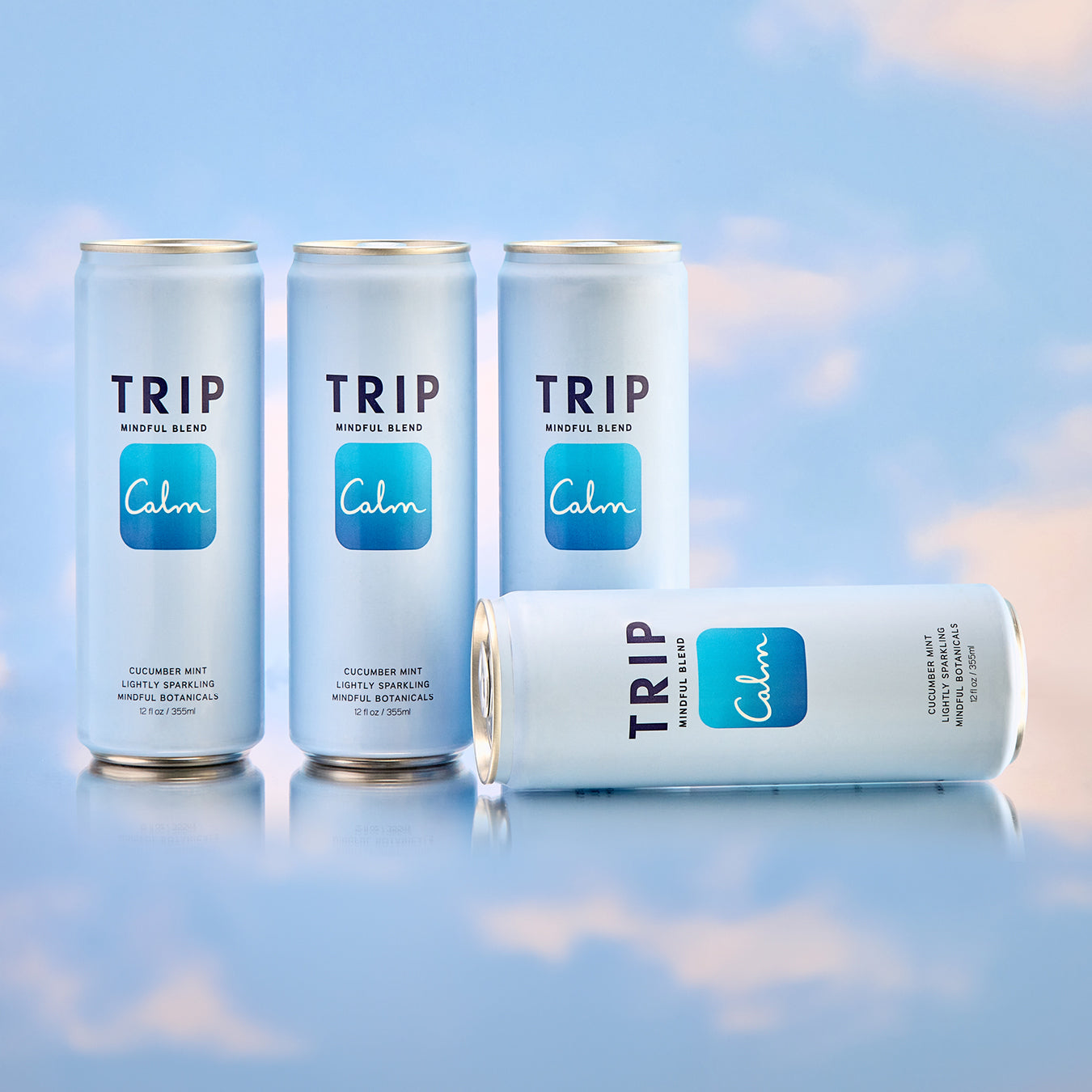
For a ready-to-sip option, consider TRIP Mindful Blend magnesium drinks. Each can contains a lightly sparkling concoction of electrolytes and adaptogens, with tasty flavors like cherry lemon, blood orange, wild strawberry and tropical mango.
Finding the electrolyte timing that works for you
Before, during or after a workout—there's no single "best time" to take electrolytes. Find a moment that aligns with your training style, preferences, personal needs and goals.
Experiment with different timing across exercise sessions to see what feels best for your body. It's about supporting your routine with consistency. That's why enjoyable habits beat rigid rules.
Check out TRIP's magnesium powder and explore our adaptogenic drinks and gummies to add to your wellness ritual.
*These statements have not been evaluated by the Food and Drug Administration. This product is not intended to diagnose, treat, cure or prevent any disease.
Sources:
- National Library of Medicine. Fluid and Electrolyte Balance. https://medlineplus.gov/fluidandelectrolytebalance.html. Accessed July 15, 2026.
- BMJ Open Sport & Exercise Medicine. Water intake after dehydration makes muscles more susceptible to cramp but electrolytes reverse that effect. https://bmjopensem.bmj.com/content/5/1/e000478l. Accessed July 15, 2026.
- European Journal of Fitness, Nutrition and Sport Medicine Studies. The Effect of Electrolytes and Energy Drinks Consumption on Athletic Performance–A Narrative Review. https://oapub.org/hlt/index.php/EJFNSM/article/view/127/127l. Accessed July 15, 2026.
- Applied Sciences. Importance of Electrolytes in Exercise Performance and Assessment Methodology After Heat Training: A Narrative Review. https://www.mdpi.com/2076-3417/14/22/10103l. Accessed July 15, 2026.
- The American Journal of Clinical Nutrition. Fluid and electrolyte supplementation for exercise heat stress. https://ajcn.nutrition.org/article/S0002-9165(23)06737-0/fulltextl. Accessed July 15, 2026.
- Applied Sciences. Effects of Electrolyte Supplements on Body Water Homeostasis and Exercise Performance during Exhaustive Exercise. https://www.mdpi.com/2076-3417/11/19/9093l. Accessed July 15, 2026.
- Nutrients. Role of Functional Beverages on Sport Performance and Recovery. https://pmc.ncbi.nlm.nih.gov/articles/PMC6213308/l. Accessed July 15, 2026.
- Frontiers in Sports and Active Living. Post-exercise rehydration: Comparing the efficacy of three commercial oral rehydration solutions. https://www.frontiersin.org/journals/sports-and-active-living/articles/10.3389/fspor.2023.1158167/fulll. Accessed July 15, 2026.
- Nutrients. Post-Exercise Rehydration in Athletes: Effects of Sodium and Carbohydrate in Commercial Hydration Beverages. https://pmc.ncbi.nlm.nih.gov/articles/PMC10674530/l. Accessed July 15, 2026.
- Nutrients. Healthy Behavior and Sports Drinks: A Systematic Review. https://pmc.ncbi.nlm.nih.gov/articles/PMC10346316/l. Accessed July 15, 2026.
- Nutrients. The Beverage Hydration Index: Influence of Electrolytes, Carbohydrate and Protein. https://pmc.ncbi.nlm.nih.gov/articles/PMC8465972/l. Accessed July 15, 2026.
- Nutrients. Electrolyte Intake and Major Food Sources of Sodium, Potassium, Calcium and Magnesium among a Population in Western Austria. https://pmc.ncbi.nlm.nih.gov/articles/PMC7400604/l. Accessed July 15, 2026.
- Nutrition Reviews. Water, Hydration and Health. https://pmc.ncbi.nlm.nih.gov/articles/PMC2908954/l. Accessed July 15, 2026.
- The American Journal of Clinical Nutrition. A randomized trial to assess the potential of different beverages to affect hydration status: development of a beverage hydration index. https://www.sciencedirect.com/science/article/pii/S000291652206556Xl. Accessed July 15, 2026.
- Centers for Disease Control and Prevention (CDC). About Water and Healthier Drinks. https://www.cdc.gov/healthy-weight-growth/water-healthy-drinks/index.htmll. Accessed July 15, 2026.